Early Signature: A Bold Playful Modern Display Font for Editorial Projects
The cursor blinks on a blank canvas, and the clock is ticking. For any editorial designer or publisher, the moment of truth often arrives not when writing the content, but when choosing the typography that will frame it. I recently found myself in this exact position while redesigning the header for a lifestyle newsletter that needed to feel both approachable and distinctly modern. The goal was to create a visual identity that didn’t just inform, but invited the reader in with warmth and energy. After testing several options, I settled on Early Signature, a typeface that immediately shifted the mood of the layout from static to dynamic. This review explores how this font supports readability, editorial mood, and publication identity in real-world design scenarios.
Early Signature as a Vibrant Display Font for Newsletter Headers
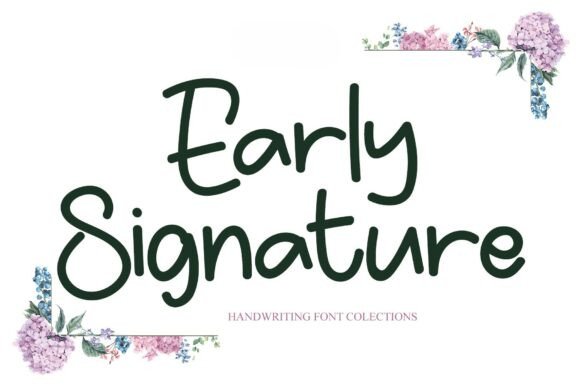
When integrating Early Signature into a digital publication, its primary strength lies in its ability to command attention without overwhelming the eye. As a bold playful modern display font, it brings a high-energy aesthetic that is perfect for grabbing readers' eyes in crowded feeds. In my project, I used it for the main headline of the weekly digest. The quirky curves and dynamic personality of the letters created an instant sense of movement, making the text feel alive rather than rigid. Unlike standard sans serif fonts that can sometimes feel sterile in creative contexts, Early Signature offered a human touch that aligned perfectly with the personal tone of the newsletter. It serves as an excellent example of how a display font can define the voice of a brand before a single word of body copy is read.
Early Signature for Lifestyle Blog Titles and Feature Pages
Beyond newsletters, Early Signature proves to be a versatile asset for bloggers and independent publishers looking to elevate their visual hierarchy. When designing feature pages or long-form articles, the challenge is often balancing personality with clarity. I tested this font for subheadings and pull quotes within a blog post about creative workspaces. The font’s distinct character allowed these elements to stand out against a clean background, guiding the reader’s eye through the narrative structure. Because it is a modern typography choice, it pairs well with contemporary web layouts, adding a layer of sophistication that feels intentional rather than decorative. For content creators who want to establish a unique brand identity, using such a distinctive creative font for titles helps differentiate their content in a saturated market.
Early Signature in Printable Guides and Digital Workbooks
The versatility of Early Signature extends seamlessly into the world of digital products, particularly for course creators and printable sellers. I applied this font to the cover and chapter openers of a coaching workbook designed for entrepreneurs. The bold nature of the letters provided a strong foundation for the layout, ensuring that key concepts were visually prioritized. When exporting these documents as PDFs, the vector quality of the font remained crisp, maintaining its integrity across different screen sizes and print resolutions. For those selling design assets or educational materials, having a commercial font that offers both style and legibility is crucial. Early Signature’s playful yet structured forms make it suitable for worksheets and planners where you need to inject fun without sacrificing professional credibility.
Readability Considerations for Screen and Print Media
While Early Signature excels as a display element, understanding its limitations is key to effective editorial design. It is not intended for body copy or dense paragraphs. The expressive curves and varying stroke widths, which give the font its charm, can reduce readability when scaled down to small caption sizes or used in long-form text blocks. In my experience, attempting to use it for extended reading led to visual fatigue, causing the reader to lose focus on the message. Therefore, it is best reserved for titles, subtitles, section headings, and short accents. For mobile layouts, where screen space is limited, using Early Signature sparingly ensures that the design remains uncluttered and accessible. This strategic application preserves the font’s impact for moments that truly require emphasis.
Font Pairing Strategies for Balanced Editorial Layouts
To maximize the effectiveness of Early Signature, thoughtful font pairing is essential. A display font with such a strong personality requires a neutral counterpart to ground the design. I paired Early Signature with a classic serif font for the body text of a recipe ebook. The contrast between the playful, modern display title and the traditional, highly readable serif body created a harmonious balance. The serif provided stability and comfort for the eyes during longer reads, while the display font added flair at the top of each page. Alternatively, a clean sans serif font works well for navigation menus or captions, offering a minimalist backdrop that allows Early Signature to shine. This combination demonstrates how mixing typefaces can enhance visual hierarchy, ensuring that users can easily distinguish between headers, body text, and supplementary information.
Technical Specifications and Licensing for Professional Use
Before incorporating Early Signature into client publications or paid downloads, it is vital to review the technical details and licensing terms. Designers should check for included styles, alternates, ligatures, and multilingual support to ensure compatibility with global audiences. File formats such as OTF and TTF are standard, but verifying web-font licensing (WOFF/WOFF2) is important if the font will be embedded in websites or interactive PDFs. For those creating digital magazine layouts or social media graphics, confirming commercial usage rights protects against legal issues. Understanding these practical aspects ensures that the premium font integrates smoothly into your workflow, supporting both web design and print materials with confidence. By treating typography as a core component of your content strategy, you can leverage tools like Early Signature to create engaging, professional, and memorable editorial experiences.